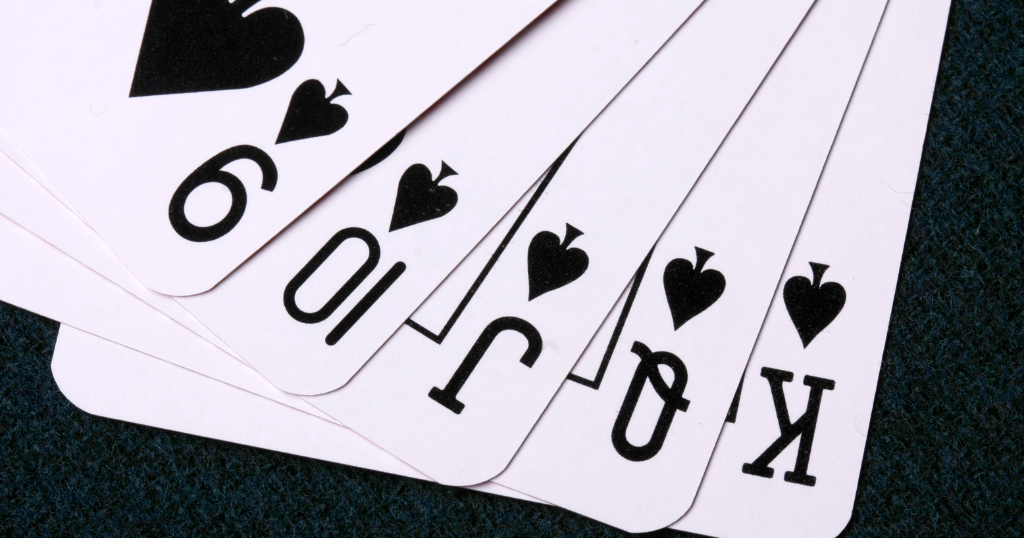
There is a moment that happens to every poker player early on. You sit down at a table, you get dealt two cards, the board runs out, and suddenly you have no idea whether you are winning or losing. The cards are sitting right there in front of you and yet the answer feels impossible to read. That confusion is one of the most expensive feelings in poker, because it leads directly to bad calls, missed value, and pots that should have been yours.
The cure is simple but it takes real work to internalize. You have to know the Texas Hold’em hands cold. Not just the order from memory, but the logic behind why one beats another, the situations where rankings get tricky, and the practical applications that turn knowledge into winning decisions. Furthermore, you have to know it well enough that recognition happens in a fraction of a second, because that is all the time you get when the action is on you.
This guide walks you through every Texas Hold’em hand, ranked from strongest to weakest, with the kind of explanation that makes the rankings stick. We will cover the math behind the order, the comparisons that trip players up, and the strategic implications you can actually apply at the table tomorrow. By the end, the entire hierarchy will feel less like a list to memorize and more like a logic system you genuinely understand.
Why Texas Hold’em Hand Rankings Exist
Before listing the hands, let me explain the principle that drives the entire ranking system. Because once this clicks, you will never need to look up another hand comparison again.
Texas Hold’em hands rank according to rarity. The harder a hand is to make using your two hole cards and the five community cards, the higher it sits in the rankings. A royal flush sits at the top precisely because the math against making one is brutal. A simple pair of twos sits near the bottom because pairs happen constantly. Rarity equals power, and that single idea organizes everything below.
| Rank | Hand | Description | Example | Chance to Make by the River |
|---|---|---|---|---|
| 1 | Royal Flush | A, K, Q, J, 10 all the same suit | A♠ K♠ Q♠ J♠ 10♠ | 0.0032% (1 in ~30,940) |
| 2 | Straight Flush | Five sequential cards, same suit | 9♥ 8♥ 7♥ 6♥ 5♥ | 0.0279% (1 in ~3,590) |
| 3 | Four of a Kind | Four cards of the same rank | J♣ J♦ J♥ J♠ 4♦ | 0.168% (1 in ~594) |
| 4 | Full House | Three of a kind plus a pair | 8♠ 8♥ 8♦ K♣ K♠ | 2.60% (1 in ~38) |
| 5 | Flush | Five cards of the same suit, any order | A♦ J♦ 9♦ 6♦ 3♦ | 3.03% (1 in ~33) |
| 6 | Straight | Five sequential cards, mixed suits | 10♠ 9♥ 8♦ 7♣ 6♠ | 4.62% (1 in ~22) |
| 7 | Three of a Kind | Three cards of the same rank | 7♣ 7♦ 7♠ K♥ 3♣ | 4.83% (1 in ~21) |
| 8 | Two Pair | Two different pairs | Q♠ Q♦ 5♥ 5♣ 9♠ | 23.5% (1 in ~4) |
| 9 | One Pair | Two cards of the same rank | A♥ A♣ 10♦ 7♠ 2♦ | 43.8% (1 in ~2.3) |
| 10 | High Card | No combination, highest card plays | K♠ J♦ 8♣ 5♥ 2♠ | 17.4% (1 in ~5.7) |
Therefore, whenever you forget whether one hand beats another, you can usually reason it out. Ask which combination is harder to assemble from a seven-card pool. The answer almost always points you to the winner. Moreover, this logic stays consistent across every standard poker variant, so the same reasoning applies whether you are playing Hold’em, Omaha, or seven-card stud.
The Complete Texas Hold’em Hand Rankings
Here is every Texas Hold’em hand ranked from strongest to weakest, with examples and clear descriptions. I will give you the full list, and then we will dig into the comparisons that actually decide pots.
That covers the full hierarchy, but the chart alone does not teach you the nuance. So let us walk through the parts that actually matter when you are deciding what to do with your stack on the river.
The Premium Texas Hold’em Hands
Starting from the top, you have the hands that essentially never lose when they appear. The royal flush is the best possible straight flush, A-K-Q-J-10 of one suit, and nothing in poker beats it. You may play tens of thousands of hands without seeing one, which is exactly why it sits at the top.
Below the royal, you have straight flushes, which cover any five suited cards in sequence. Four of a kind, often called quads, comes next and means exactly what the name suggests. Four kings, four sevens, four of any single rank. Quads crush almost everything in their path and only lose to higher quads, straight flushes, and royals.
Now we arrive at the comparison that costs new players real money, the full house versus the flush. Many beginners assume the flush wins because flushes look so impressive on the board, five matching colors lined up. However, the full house wins, and the rarity principle explains why. Assembling three of a kind and a pair simultaneously happens less often than collecting five cards of one suit, so the full house ranks higher. Whenever you hold a flush against a board that pairs, especially on the turn or river, you need to start thinking carefully about whether your opponent just filled up. This single mistake has stacked more new players than almost any other.
The Mid-Range Texas Hold’em Hands
Honestly, most hands you play to showdown will involve the middle of the chart. Pairs, two pairs, occasional straights and three of a kind. So understanding these deeply matters far more than memorizing the royal flush you will rarely see.
A straight beats three of a kind, which catches some players off guard. Five cards in sequence, even with mixed suits, outranks three matching cards because straights happen slightly less frequently. Meanwhile, three of a kind beats two pair, and two pair beats a single pair. The logic stays consistent. Harder hands win, period.
Speaking of pairs, here is where kickers enter the picture and quietly decide enormous pots. Suppose you and your opponent both hold a pair of aces at showdown. Who wins? The answer comes down to the kicker, which is the highest unmatched card alongside the pair. If you hold ace-king and your opponent holds ace-queen, both of you have aces, but your king outranks their queen and you scoop the pot. This is exactly why professionals care so much about the second card in their starting hand. A hand like ace-king plays vastly stronger than ace-five even though both contain an ace, because the kicker determines the outcome in countless showdowns. If you want to dig deeper into which starting hands actually play well preflop, the how to learn poker ranges guide breaks down exactly how strong players think about their opening hands.
The Bottom of the Chart: High Card
Finally, we reach the bottom, the high card. When the river falls and you have made absolutely nothing, no pair, no draw, just five disconnected cards of different suits, your hand consists simply of your highest card. Ace-high beats king-high, king-high beats queen-high, and so on down the ladder.
Although high card sounds useless, it actually wins more pots than beginners expect. Because both players miss the board constantly, plenty of hands reach showdown with neither player holding even a pair. In those moments, the higher card scoops the pot, so even ace-high has genuine value, especially when you suspect your opponent was chasing a draw that never arrived.
Moreover, understanding high card situations connects directly to bluff-catching, one of the most profitable skills in modern poker. When you hold ace-high on the river and your opponent fires a large bet, your decision hinges on whether they are value betting a real hand or bluffing with their own busted draw. That kind of advanced thinking starts with simply knowing that your ace-high beats their nothing.
Common Texas Hold’em Hand Mistakes
Even players who know the rankings by heart still misread hands at the table, often because they get distracted by what their cards “feel like” rather than what the board actually says. Therefore, let me cover the patterns that catch even experienced players.
First, overvaluing flushes against paired boards. When the board pairs, full houses become possible, and your flush goes from a monster to a marginal hand. Sharp opponents represent full houses on paired boards constantly, and bluff-catching with a flush in those spots burns money over time. So whenever the board pairs and the action gets heavy, slow down with your flush and ask whether you are actually ahead.
Second, undervaluing straights. Straights win plenty of pots, but they also lose to flushes on the same board. Whenever your straight uses a connected board that also includes three suited cards, your hand is far weaker than it looks because the flush is live. Many players go broke holding a confidently played straight against an opponent who quietly hit the flush on the same runout.
Third, misreading two pair. Two pair is a solid hand, but it gets beaten more often than beginners expect. Sets, straights, flushes, and higher two-pairs all crush it. Furthermore, on coordinated boards with multiple draws, your two pair often becomes the kind of hand that wants to pot-control rather than bloat the pot. Knowing when to push two pair and when to keep the pot small separates winning players from the ones who keep getting felted.
Finally, ignoring the kicker. New players see “a pair of aces” and stop analyzing. However, the kicker decides countless pots, and a weak ace can be a financial disaster when an opponent holds a stronger one. Always read the full five-card hand, not just the headline pair.
Texas Hold’em Hands in Action: Real Strategic Applications
Knowing the rankings cold is necessary, but it only matters when you can apply them under pressure. So let me walk through how each tier of hand actually plays in practice.
Premium hands like full houses and quads almost always want value. You build the pot, charge draws, and extract chips while you are crushing your opponent’s range. The mistake here is slow-playing too often, which lets opponents hit redraws and turn easy pots into close ones.
Strong but vulnerable hands like flushes and straights demand more thought. Are you on a board where higher hands are possible? Is your opponent capable of having a full house or a set? These are the hands where reading the board and reading your opponent both matter. Whenever you want to see exactly how these spots played out across your sessions, Check Replay lets you replay your hands visually and study where your reads were sharp versus where you got out of line.
Medium-strength hands like top pair and two pair are where most pots get played and where the most money gets won or lost. The skill here lies in pot control. Build the pot when you are ahead, keep it small when you might be behind, and avoid the urge to put your stack in just because you “made a hand.” This connects directly to the broader concept of pot odds in poker, since the right action depends on the math behind the price you are being offered.
Weak hands and high-card hands play primarily as bluff-catchers or fold candidates. You are rarely value betting these, but you can call down strong if you suspect the bluff frequency is high. This is also where blockers start to matter, since holding cards that block your opponent’s value hands tilts the math toward calling.
Texas Hold’em Hands vs Other Poker Variants
One thing worth noting, because it confuses players who branch out, is that hand rankings stay consistent across most popular variants. Texas Hold’em, Pot Limit Omaha, seven-card stud, and many others all use the same hierarchy you just learned. However, some games flip the entire script.
In lowball variants like 2-7 Triple Draw, the worst traditional hand becomes the best. Players actively chase the lowest possible cards, and a hand like 7-5-4-3-2 becomes a monster. These games sound bizarre at first, yet they follow internally consistent logic once you adjust your thinking. For most of your poker career, though, the Texas Hold’em rankings cover everything you need to know.
Furthermore, even within Texas Hold’em, certain formats emphasize different aspects of hand strength. In short-deck Hold’em, for instance, flushes beat full houses because the removal of low cards makes flushes statistically rarer. Always confirm the specific ruleset of the game you are sitting down to play, because small variations can completely change which hand wins.
Building Hand Reading Skills Beyond the Rankings
Although knowing the rankings is the foundation, the real edge in poker comes from reading what your opponent might hold, not just identifying your own hand. So the next step beyond memorizing the chart is learning to estimate ranges, count combos, and recognize patterns in betting behavior.
Whenever you finish a session, spend a few minutes reviewing the spots where hand strength surprised you. Did you overvalue a flush against a paired board? Did you fold the best hand because you misread the rankings under pressure? Reviewing these moments transforms abstract knowledge into genuine instinct, and tools like Check Replay make the process far easier by letting you replay the hand visually with full board context.
Over time, the rankings stop being something you consciously think about. You glance at the board, glance at your hole cards, and just know where you stand. That fluency is the goal, and it arrives faster than you think once the underlying logic clicks.
Frequently Asked Questions
What is the highest hand in Texas Hold’em?
The royal flush is the highest hand in Texas Hold’em. It consists of the ace, king, queen, jack, and ten all of the same suit. It is unbeatable and also the rarest hand in the game, which is exactly why it sits at the top of the rankings.
Does a flush beat a straight in Texas Hold’em?
Yes, a flush beats a straight. Five cards of the same suit in any order outrank five sequential cards of mixed suits because flushes are statistically harder to make. This applies in all standard Texas Hold’em games.
Does a full house beat a flush in Texas Hold’em?
Yes, a full house beats a flush. Although the flush looks impressive, a full house is harder to assemble, which is why it ranks higher. Whenever you hold a flush against a likely full house, especially on a paired board, you should slow down and consider folding.
What happens when two players have the same hand in Texas Hold’em?
When two players make the same type of hand, the kicker decides the winner. The kicker is the highest unmatched card in the five-card hand. For example, if both players hold a pair of kings, the player with the higher side card wins. If the kickers are also identical, the pot is split.
Are Texas Hold’em hand rankings the same in other poker games?
Mostly yes. Pot Limit Omaha, seven-card stud, and most popular variants use the same hand rankings as Texas Hold’em. However, lowball games like 2-7 Triple Draw invert the rankings, and short-deck Hold’em ranks flushes above full houses due to changes in card frequencies.
How many possible Texas Hold’em starting hands are there?
There are 1,326 possible two-card starting hand combinations in Texas Hold’em when you account for every suit pairing. However, these collapse into 169 distinct strategic starting hands when you group by suitedness, since AhKh plays the same as AsKs in most spots.
Final Thoughts
Texas Hold’em hands form the bedrock of every decision you will ever make at the poker table. Royal flush at the top, high card at the bottom, and a clean logic of rarity tying the whole hierarchy together. Once you understand that harder hands beat easier ones, the rankings stop being a list to memorize and become something you simply know.
So take the chart, study the tricky comparisons like full house over flush and the role of kickers, and then put the knowledge to work at the table. Because the rankings are not the destination, they are the starting line. Every bluff, every value bet, every fold builds on this foundation. Get it solid, and the rest of the game opens up in front of you.