Most players spend years trying to improve their A-Game.
The biggest winners spend their time reducing their C-Game.
Because your results are rarely determined by your best poker. They are usually determined by how often your worst poker shows up.
If you have followed the poker world for a while, you already know how much is written and recorded about the classic “A-Game”. Guides, streams, even casual table talk tend to focus on “playing your best”. But as I have noticed both in my play and in the coaching sessions I have observed, the secret to steady progress in this game isn’t only about what happens when you are at your peak. Instead, the heart of long-term performance lies in recognizing when you have slipped into your B or even your C Game, and learning to return to your best more often.
What are A, B and C Game states?
Every player, from beginner to seasoned pro, has noticed different versions of themselves at the table. Sometimes, decisions feel sharp, clear, and automatic, while other times you wonder how you could have misplayed a simple hand. I often break these zones down as:
- A-Game: The state where you are focused, calm, and making the best possible decisions according to your knowledge and training. You stick to your ranges, adapt to opponents, read situations well, and rarely let emotions cloud your thinking.
- B-Game: Your typical poker mode. You play about as well as usual, but the focus isn’t perfect. You might make small mistakes or lose discipline in tricky spots, but you are still controlling the basics.
- C-Game: This is the version of you that appears when you are tired, tilted, frustrated, overconfident, distracted, or just emotionally checked out. Discipline vanishes, curiosity calls sneak in, and hands you know you should fold suddenly become calls or bluffs at the wrong time.
This idea, discussed at length in Jared Tendler’s The Mental Game of Poker books, helped me become much more aware of when I was starting to slide into bad patterns. It also taught me that the real battle in this poker career is not about pushing your A-Game higher, but about making your B and C Game less common, and less costly.
 How often are you playing your C Game?
When I started writing down my sessions, I expected to find most of my losses came when I ran bad or got unlucky in key hands. But as I looked closer, I realized the biggest pots I lost often came when my mind slipped, not my strategy. Here are just a few examples:
- Calling too wide right after taking a tough beat because I wanted to “win it back”.
- Pushing hands preflop just to break a cold streak, abandoning ranges that I knew worked.
- Drifting into autopilot late in a long session, failing to adjust to new players or changing dynamics.
- Making thin (and ill-advised) river calls just because I could not let go of curiosity or ego.
- Letting distractions, a phone notification, a conversation in the room, rob me of focus for a key pot.
Most of these don’t reflect technical leaks. They are mental game errors, moments when I lost sight of my process or fell into emotional traps. If you look at your results, you might find the same pattern.
The quality of your average play is more important than your best moves.
Session review: Finding mental leaks
As someone who uses tools like Check Replay to go over my hand histories, I noticed something surprising: sometimes I knew the right answer away from the table, but not in the middle of the action. When the cards were flying and the emotions were high, I let myself break my rules. It was not a question of knowledge, it was failing to stay in my A-Game mode.
Most players already know decent strategy, but real improvement comes when you execute those ideas under pressure – when it counts most. Reviewing hands is useful, but looking at the context and noticing your own thought patterns is even more valuable.
Lessons from poker psychology
Both of Tendler’s books highlight something that took me years to accept: the biggest leaks in poker often come from a lack of self-awareness, not a lack of knowledge. When I started naming my bad habits, I found it easier to spot them as they started, rather than after another losing session.
 The most valuable skills I picked up included:
- Paying attention to my emotional state before and during a session.
- Writing down obvious mistakes that had nothing to do with card strength or position, but with my mood or focus.
- Noticing patterns. Did my C-Game always appear late at night? After three hours of play? After losing a big pot?
- Taking breaks, using breathing exercises, or simply walking away for a short while to not let a bad habit settle in.
This approach helped me improve not only my play, but my attitude toward studying and reviewing using replayer tools as well. It also made it easier to spot when my worst sessions were caused by mindset slips, not technical errors.
Exercises for identifying your own A, B, and C Game
To get a real sense of your personal performance range, I suggest taking a few practical steps:
- During your next session, keep a small notebook or a file on your phone nearby. After every big hand or difficult decision, jot down a word to describe your state, focused, tired, angry, bored, confident, etc.
- After the session, review the list. Put check marks next to hands you think you played well. Circle hands tied to negative emotions or drifting attention.
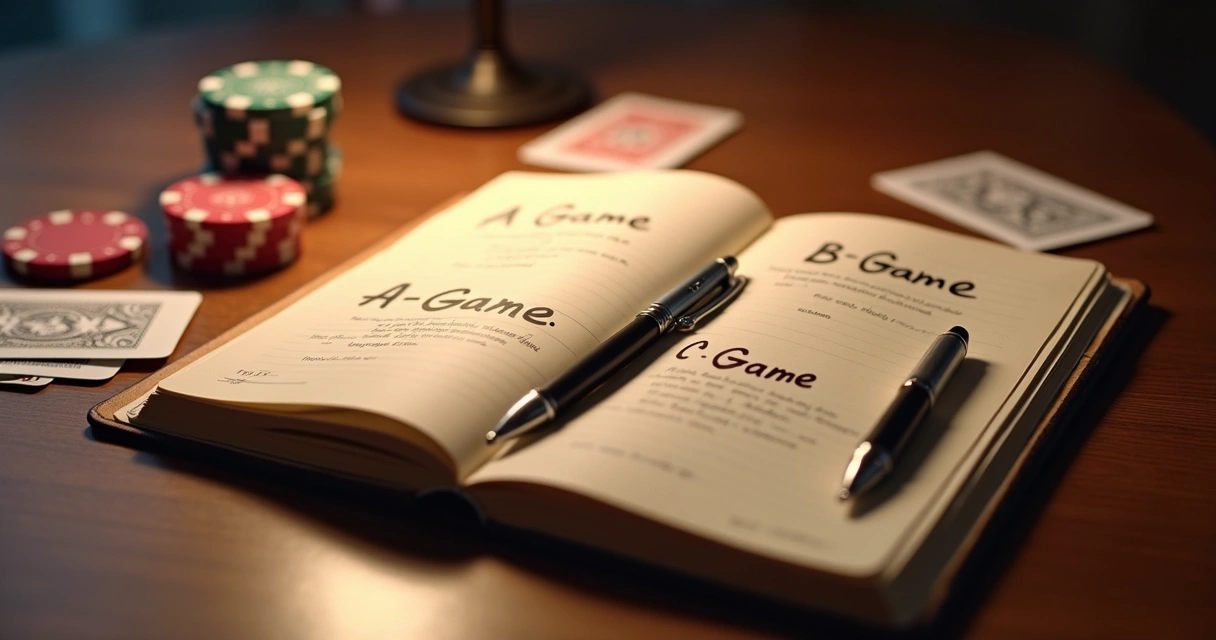
- Fill out three short lists, titled “My A Game”, “My B Game”, and “My C Game”. For each, list behaviors and feelings you notice. For example, your A Game list might include “planning ahead, not rushed, not distracted”; your C Game might include “impulse calling, wanting to end session early, irritation.”
- Next, look at which triggers appear most often. Is your C Game more common after a rough beat, when you skip meals, late at night, or when multitasking?
- Pick one clear signal that your C Game is near (for me, it’s checking my phone between every hand). Commit to a simple reset ritual: a deep breath, a 30-second walk, or putting your phone away. Track if this helps you get back to A or B Game faster.
In my experience, tracking consistency is easier when you use hands review tools, especially ones that let you tag hands and add session notes. Combining strategy notes with reflections on your mindset lets you build a better process over time. You can look for tools that suit your style, just as I did with Check Replay.
Why average days matter more than your best days
Everybody loves to identify with their A-Game.
The problem is that your A-Game might only appear 10% of the time.
Your B-Game shows up every day.
Your C-Game appears whenever you’re tired, frustrated, distracted, or emotional.
That means your long-term results are usually much closer to your B-Game than your A-Game.
A player with a world-class A-Game but a terrible C-Game will often lose to a player whose A-Game is less impressive but whose worst poker is still disciplined and controlled.
Consistency beats brilliance in the long run.
I meet many players who judge their skill based on their very best runs. But a steady, winning player succeeds by rarely letting their worst version show up and take over for long. The highs are fun, but it is how you manage the regular and the rough days that shapes your results.
Poker isn’t about perfection; it’s about consistency on average days.
The true skill in poker is limiting the time you spend in B and C Game, and building systems to bring yourself back to A Game sooner.
Conclusion: Make every session a step forward
In my opinion, the fastest path to long-term progress in poker is not a new playbook or strategy, but honest self-reflection. If you take the time to define your own good and bad behaviors, and act quickly when they show up, you’ll protect your results, and build a stronger game for years to come.
The next time you finish a session, ask yourself not how many perfect plays you made, but how quickly you recognized the slippery slope to your C Game. Want to study your hands with more insight and track your mindset patterns in real sessions? Give Check Replay a try and see how much more you can learn about your own Mental Game.
Frequently asked questions
What is the A, B, and C game in poker?
The A, B, and C game describes the different mental states a player experiences: A-Game is your peak performance, B-Game is your average play with minor mistakes, and C-Game is your worst state—often under stress or emotional pressure—which leads to major errors and emotional decisions.
How does mental game affect poker performance?
Mental game influences every aspect of poker, from decision making under pressure to managing tilt and maintaining discipline. Strong mental skills help players avoid costly mistakes, recover faster from setbacks, and play more hands in their best state. This leads to better consistency and long-term results.
How can I improve poker consistency?
Improving poker consistency comes from self-awareness and building routines. Track your emotional state during sessions, review hands for mental mistakes, and create habits that reset your focus. Using tools like replayer platforms can make this process systematic and practical.
Why is self-awareness important in poker?
Self-awareness lets you notice when you’re drifting from your best play. By recognizing signs of tilt, fatigue, or frustration early, you can take action and return more quickly to good decision making before a session goes off track.
What are tips for a strong poker mindset?
Some helpful tips include: set clear session goals, take breaks when you spot C-Game triggers, review not just your hands but your mindset after sessions, write down patterns you notice, and practice returning to your A-Game using brief resets like deep breathing or short walks.