When I sit at a final table, I know ICM will shape every chip and every bet more than the cards themselves. Over countless tournaments, what has stood out to me is this: Final tables are not only about strong hands or lucky boards. They are about understanding who can afford to gamble, who feels pressure the most, and how to turn those forces into a real advantage.
Here, I’ll share the seven advanced ICM tactics I rely on to dominate final tables. Whether you’re using a platform like Check Replay to break down hands or prepping for a major event, these tactics will help you see what others may miss.
ICM pressure: Why it matters more than your cards
While reviewing hundreds of my own critical spots, I noticed something many players miss: ICM (Independent Chip Model) pressure is not distributed equally at the final table. Some players are handcuffed. Others can attack freely. Understanding this is step one.
- Medium stacks face the hardest choices and the highest pressure.
- Chip leaders can be relentless—if they understand their power.
- Short stacks are desperate, but sometimes freeroll risk.
- The very shortest stack shapes how everyone else plays.
Final table winners know how to read and manipulate these dynamics, not just the board.
The seven advanced ICM tactics to command a final table
I’ve grouped these tactics based on situations that keep coming up in my studies (and in Check Replay session reviews). Each one addresses a piece of the pressure puzzle.
1. Attack the medium stacks relentlessly when you have the chip lead
If you are the chip leader, the real edge is not just in your stack but in your ability to apply brutal pressure—especially to players sitting in the middle.
Medium stacks stand to lose the most if they bust before the short stack. Their chips may be worth less than the prize ladder. So they fold marginal hands. Sometimes they make folds that would shock you in cash games.
Attack where the pain is greatest.
Open wider, 3-bet lighter, and force them to play for stacks or give up premiums.
2. Use the risk premium to size your aggression
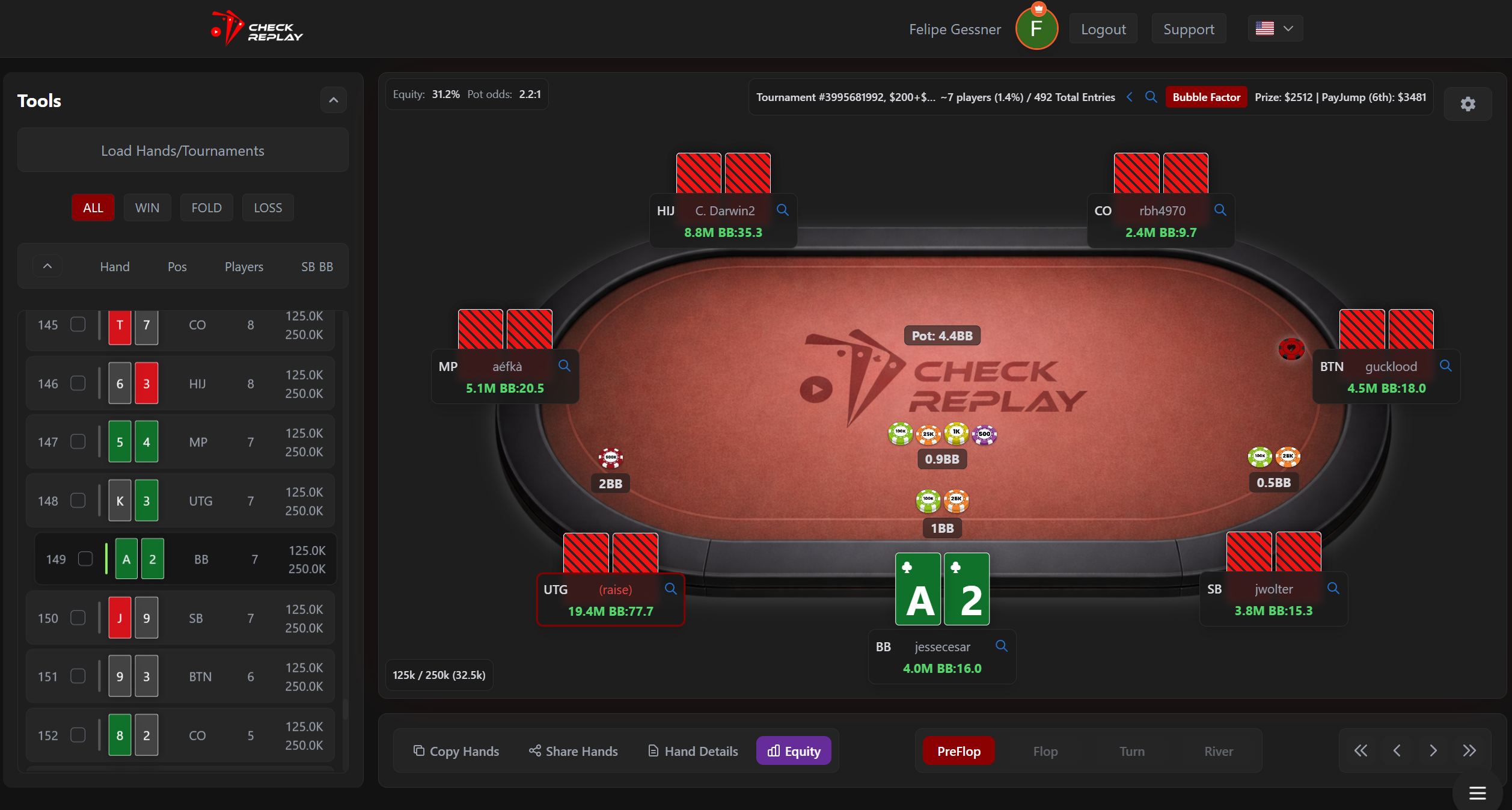
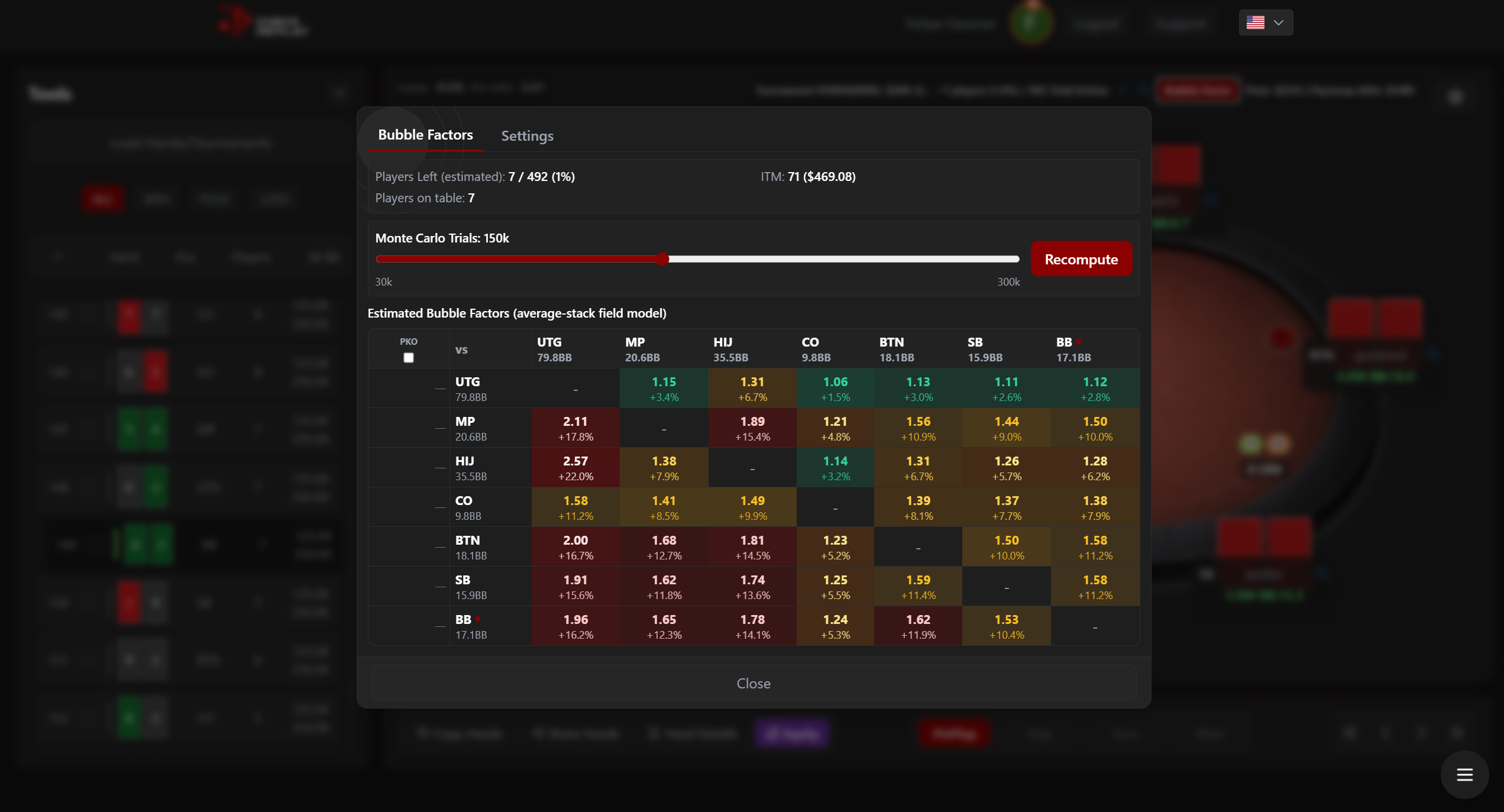
Risk premium is the extra % equity a player requires to proceed due to the pay jumps. At final tables, and especially for medium stacks, it can be huge.
Medium stacks may need as much as 55% to 65% equity to justify calling an all-in, compared to roughly 33% to 45% in many common chip EV situations. You can use Check Replay to calculate Bubble Factor and see exactly how much additional equity is required in each spot.
If you understand this, you don’t just play more hands—you adjust your sizes to threaten their tournament life. Hands that would be clear calls in cash become tough folds in a final. This pivot is often the difference between cashing big and just surviving a bit longer.
3. Blind pressure: Identify who is handcuffed by ICM and exploit
The presence of a micro-stack (a stack much smaller than the rest) chokes the rest of the table. Medium and even large stacks must avoid clash with each other until the micro-stack busts, because doubling a similar stack might not earn them extra money, but busting first hurts a lot.
I often target these circumstances intentionally:
- Opening light from positions just before or after the micro-stack
- Isolating the micro-stack themselves to induce folds from medium stacks
- Making moves on the button/small blind vs. mid-stacks who are handcuffed
Every hand you play during this phase can be worth double—or not worth playing at all, depending on who is in the blinds and who the micro-stack threatens.
4. Adjust shoving and calling ranges as a short stack
When I find myself short stacked, I know ICM urges caution, but sometimes the only way to win is to gamble. The lowest stacks, oddly, gain leverage to go all-in lighter, because others do not want to bust ahead of them.
By choosing my shoves carefully when there’s another shorter stack at the table, I put maximum pressure on those clinging to survival. It’s scary. But it is profitable, and hand histories on Check Replay have shown me the math backs this up.
The key? Detect when others fear the bust-out more than you do.
5. Fold Hands for Value: When the Nit Becomes Very Aggressive
One of the biggest final table lessons I learned is that sometimes the most profitable move is to fold a hand that looks far too strong to let go.
At first, this feels counterintuitive. In cash games, folding hands like AQs, TT, or even JJ in certain spots would seem absurd. But final tables are different. Under heavy ICM pressure, preserving your tournament life can be worth far more than taking a small chip EV edge.
This creates a fascinating dynamic: players who normally look extremely tight can suddenly become very aggressive.
Why? Because they understand that their opponents are handcuffed by Risk Premium.
A medium stack facing a shove from another medium or large stack may need 55% to 65% equity to justify calling, compared to roughly 33% to 45% in many standard chip EV situations. You can use Check Replay to calculate Bubble Factor and see exactly how much additional equity is required in each spot.
That means:
- Strong but non-premium hands often become folds.
- Aggressive players can profit by shoving wider.
- Tight players who understand ICM can suddenly appear hyper-aggressive.
In other words, the “nit” becomes aggressive not because they are gambling, but because they know everyone else is forced to fold much more than usual.
This is one of the most powerful final table exploits in tournament poker.
The players who understand when to fold strong hands—and when others are forced to do the same—gain a massive edge over opponents who rely only on intuition.
6. Recognize and punish over-tight opponents
The easiest final tables are those where everyone plays scared. Some players, especially new to ICM, fold way too much. If you pay attention, you’ll notice players who almost never defend their blinds or challenge 3-bets when pay jumps get steep.
Against them, I widen my attack. Sometimes, I win pots with nothing but pressure. Other times, I find myself bluffing with the bottom of my range—because I know my opponents are terrified of busting. It’s not reckless. It’s calculated and based in observation.
 7. Study real final table hands, not just charts
I can’t count how many times I learned more from reviewing key final table hands than from any push/fold chart or pre-baked calculation. Reviewing spots—especially with powerful tools like Check Replay—shows the trade-offs, the near misses, and what could have been. These honest sessions reveal leaks and open new possibilities.
If you’re looking for structured examples of advanced moves, I’d point to resources like this deeper guide on advanced ICM strategies and the final table dominance step-by-step manual. They put real money situations front and center, the way ICM works in practice.
Conclusion: Where true final table domination comes from
When I watched my own journey from nervy first-timer to confident regular, the change came from how I read pressure. Not cards. Not luck. But pressure, stacks, and what everyone stands to lose—or win—in the next hand. If you can spot who can afford to gamble, and who cannot, you own the table.
Grinding through hand reviews on Check Replay, focusing on who folds, who shoves, and why, changed my final table results. I recommend testing these tactics yourself, with your hand histories or while spectating others. If you want to start seeing poker on a new level, put these ideas to work and take your analysis as seriously as your play.
Ready to bring your ICM knowledge into the real world? Try Check Replay for free and push your decision-making edge far beyond the average player.
Frequently asked questions
What is ICM in poker tournaments?
ICM (Independent Chip Model) is a mathematical model that estimates the cash value of your chip stack at any moment in a tournament, based on current payouts and all player stacks. It helps players make better fold, call, and shove decisions, especially when prize jumps are large.
How does ICM affect final table play?
ICM changes how valuable your stack is in chips versus money, especially at final tables. Players are forced to avoid unnecessary risk, as busting early means missing significant pay jumps. This leads to tighter play, more folds from medium stacks, and a higher focus on survival over pure chip gathering.
What are advanced ICM tactics?
Advanced ICM tactics include exploiting pressure points on medium stacks, adjusting shoving and calling ranges based on pay jumps, using your chip lead to push others, folding hands that would normally be strong, and recognizing when opponents are playing overly tight due to fear of elimination.
Is it worth it to learn ICM?
Yes, understanding ICM can turn deep tournament runs into big paydays by helping you avoid big mistakes at high-leverage moments. Players who master ICM tend to consistently finish higher, especially in tournaments with steep payouts at the top.
How can I improve my ICM decisions?
Upload your final table hand histories to Check Replay and discover exactly where ICM pressure is creating your biggest opportunities—and your most expensive mistakes.