When I started taking poker more seriously, it became clear to me that understanding what really happens during each hand was my gateway to better decisions. I believe the difference between improving and spinning wheels comes down to using the right online tools, building a thoughtful routine, and truly engaging with both theory and community. In this article, I will share how to craft an online poker study approach that transforms not just your game but the way you think at the tables.
Why reviewing poker hands matters
I still remember my first deep-dive session using a poker replayer. I was shocked by how many spots I had completely misjudged. The instant replay exposed leaks—both obvious and subtle—that I was missing if I just relied on memory.
Reviewing hands means breaking down every action, plan, and emotion that went into the decisions you made, shining light on both the logic and the flaws in your thought process. It’s more than replaying big pots; it’s about forming a habit of self-examination that fuels improvement every session you sit down.
It’s not the result, but the process, that teaches the lesson.
Here is what happens every time I study my hands:
- I find routine mistakes—like calling too wide from out of position or missing value bets.
- I spot times when emotion clouded my judgment, a pattern confirmed by the University of Helsinki research on emotion’s impact on poker math and accuracy.
- I get a clear view of how my decision-making shifts under pressure, especially when the pot grows or I feel watched.
Winning online poker is about more than luck or math. As the University of California Davis study found, elite players combine their own cards with opponent behavior to stay unpredictable. The sooner you can train your mind to do the same, the faster your edges grow. And that starts—for me and for most players I know—by building a rock-solid hand review habit.
Forming a study routine that fits your life
Consistency beats intensity. Early on, I aimed for marathon study blocks, but burnout hit fast. My real progress arrived when I built a schedule I could stick to, using short focused sessions several times a week instead of rare, exhausting ones.
I suggest this approach:
- Pick a consistent slot—maybe right after your online sessions or at a set hour each day. Your brain loves routine.
- Limit each review session to a handful of hands, not hundreds. Quality over quantity is key for real learning.
- Keep distractions such as phones or open tabs to a minimum so that you can focus on details that truly matter.
- Log your observations: I use a simple notebook or a digital document to jot down leaks, tricky spots, and questions for later.
Building a habit of small, regular study sessions compounds knowledge and transforms your gameplay steadily. That’s what has worked for me, and for players I’ve coached or discussed poker with over the years.
Setting up and using a poker replayer
When it comes to hand review, nothing matches the clarity of watching hands replayed around the virtual table. I use a tool like Check Replay for several reasons: quick uploads, custom visual settings, and easy sharing with others when I want a second opinion.
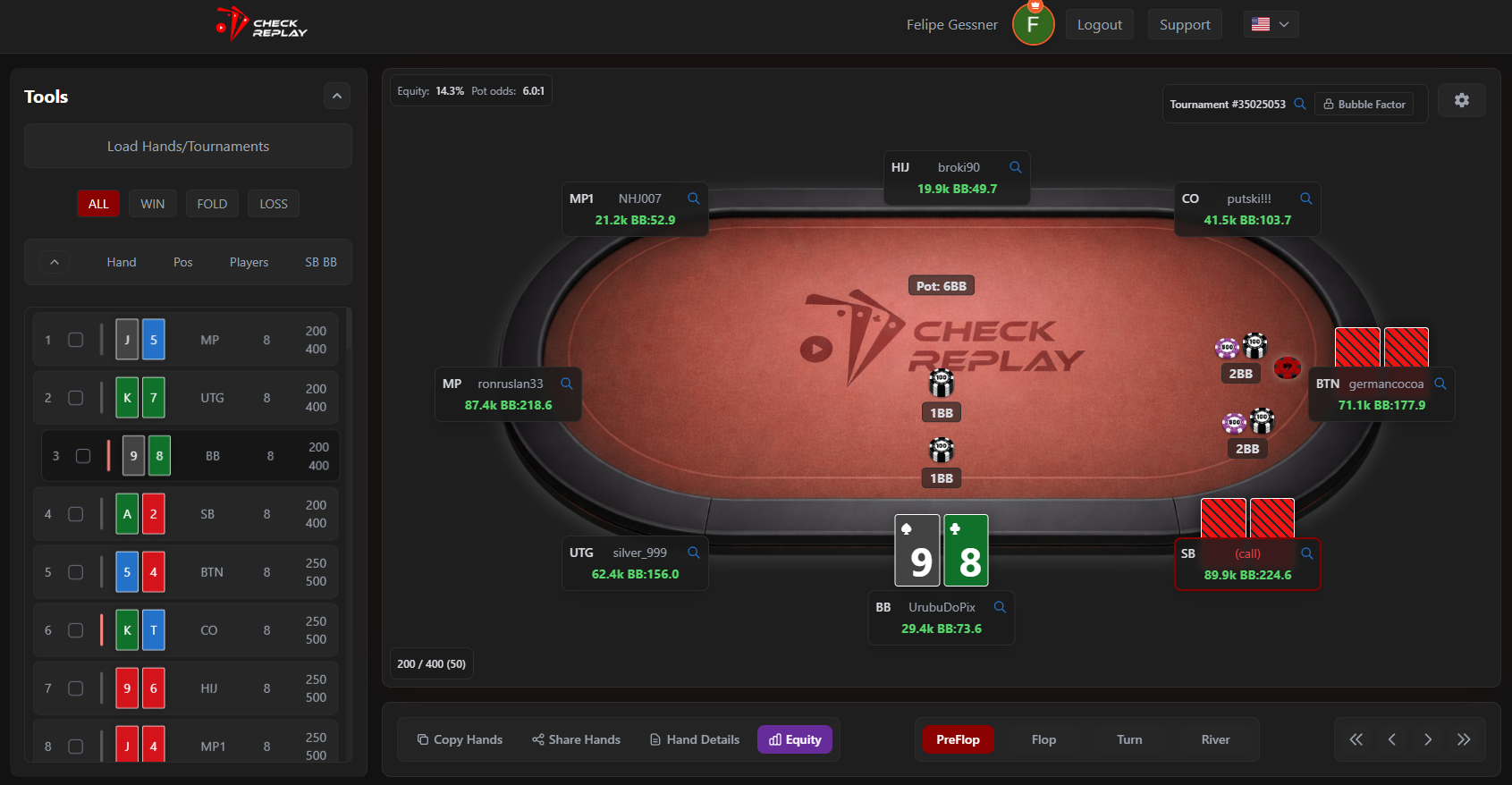
Here’s how I set up my own workflow with a hand replayer:
- After a session, I export the hand history from my online poker client.
- I upload particularly tough hands or ones where the outcome surprised me into the replayer tool. A few at a time is plenty.
- The timeline and visual controls help me analyze bets, stack sizes, and player actions in slow motion, catching nuances I missed when the pot was live.
- If I want to show the hand to a coach or friend, I just create a shareable link—no need to send big files or screenshots.
I love how this process brings precision to my reviews. The ability to change the display, pause or move street by street, and annotate decisions provides context that verbal recounting can’t match. For more technical guides on setting up these tools, I found this online poker tools guide very useful.
Poker replayers are the ideal way to take memory, guesswork, and bias out of the learning process—showing you exactly where things went right or sideways.
Building your review checklist
Even after years of play, I need to keep myself honest during study. A structured checklist helps a lot. Here’s what I use when I load up a hand for review:
- What was my position at the table?
- How many chips and what effective stacks were in play?
- Who were the opponents, and what do I know about their style?
- Did I have a plan preflop? Was I adjusting to dynamics or just reacting?
- What range of hands could each player reasonably hold at each stage?
- Were there clear mistakes—bet sizing, slowplays, missed value?
- If stacks got big, did I play scared or aggressive? Was my logic sound in those moments?
I found that using a tool like Check Replay makes answering these questions faster and more grounded. Since my hand histories show everything on one screen, I avoid bias or filling in the gaps from faulty memory.
Preflop: The first decision shapes the rest
When I started to get serious about grinding online, I underestimated how quickly preflop errors affect win rates. After hundreds of sessions and learning from my own losses, I can tell you that nearly all profitable online poker strategies start with disciplined, thoughtful preflop choices.
The most common mistakes I see in my own reviews (and that of newer players I coach) include:
- Calling with speculative hands in early position more often than is wise.
- Not adjusting raising ranges based on who is left to act, or on the tendencies of the blinds.
- Ignoring stack sizes when deciding whether to call, raise, or fold, especially in tournament settings.
- Missing profitable 3-bet or 4-bet spots for fear of aggression.
My tip: use your poker replayer to focus entire review sessions on preflop only. Try reviewing only your opens from different positions, or just look at your actions from the big blind for a week. Over time, you’ll see patterns and can work on shoring up the biggest weaknesses first.
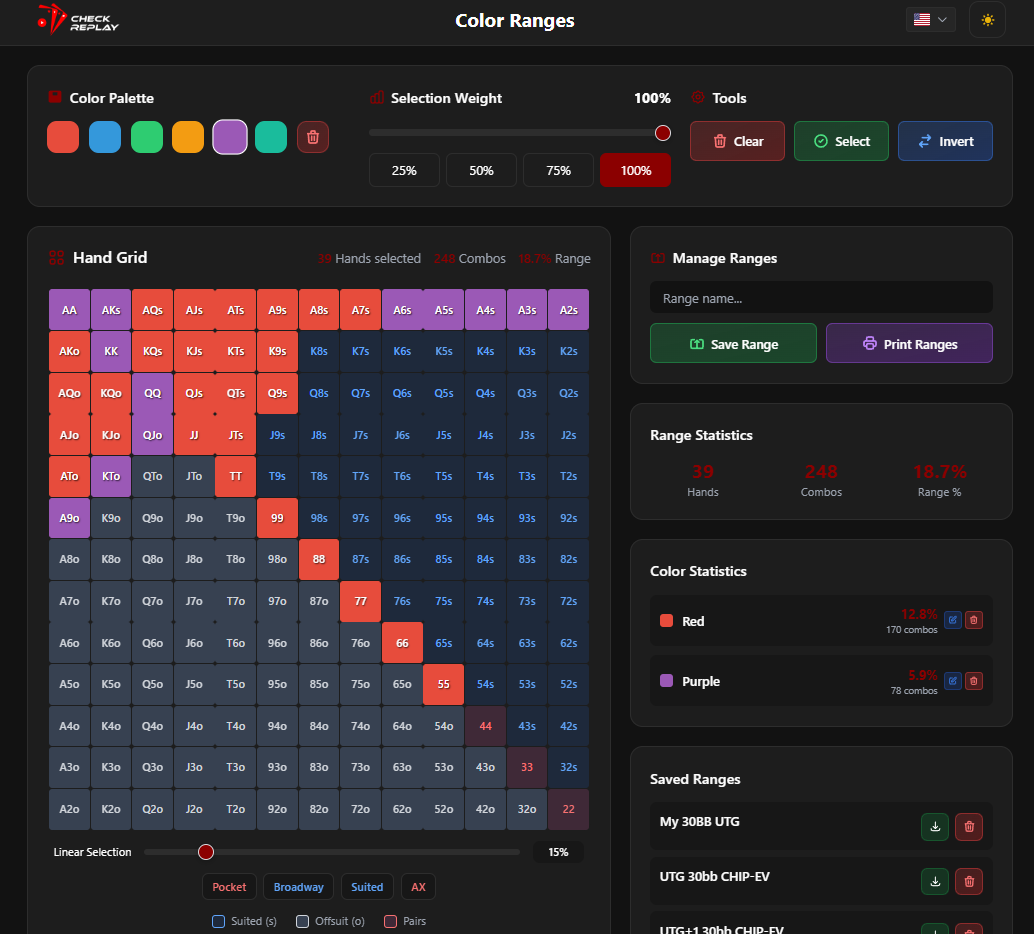
You can build your ranges for free on https://web.checkreplay.com/ranges
Mastering preflop play gives you a foundation. Everything gets easier from there.
Postflop: Turning theory into action
If preflop makes or breaks your spots before the flop, postflop is where the money is truly won or lost—and where reviewing with a poker replayer shines brightest.
Some things I pay special attention to in my reviews:
- Did my flop bet size make sense based on the texture of the board?
- Was I playing too passive on scary turns or rivers?
- Did I get “married” to a big hand and fail to recognize a changing situation?
- What signals was I getting from opponent bets—were there clues I missed?
The goal is to train your mind to spot situations where the math, the story told by the actions, and live reads (or timing tells) align—or don’t.
One trick that helped me is pausing the hand after each street and writing down my thought process. Would I actually make the same action if I didn’t know the results? This kind of “results-blind” thinking can reveal places where I was betting more on hope or fear than skill.
Adding GTO theory to your hand reviews
At some point in your journey, you’ll hear about GTO (game theory optimal) strategy. There’s a reason why: as research from The College of Wooster shows, game theory shapes how strong players approach both pre- and postflop choices.
Integrating GTO tools and concepts into your hand analysis helps you anchor your review in sound math instead of just gut feel. I started pairing my hand reviews with GTO solvers for trickier spots. I’d replay the hand, compare it to solver suggestions, and look for where my thinking diverged and why.
This can be done step by step:
- Select a tricky hand from your session.
- Try to assign each player a realistic range at every point in the hand, not just the one holding you saw at showdown.
- Enter these ranges and community cards into a solver, then see how your play compares to an optimal strategy.
- Note where the solver’s recommendations surprised you—was it a check where you bet, a fold where you called, or a tiny raise where you jammed?
Reviewing these differences over time gave me huge insights into where I was too aggressive, too passive, or thinking about ranges incorrectly altogether.
Studying opponent tendencies and leaks
If you ever felt like an opponent “had your number” or always found your bluffs, the truth is they probably studied your previous actions—and you can do the same. My biggest single-session win happened after I spent a week reviewing not just my hands, but how a regular opponent played back at me in similar spots.
In my personal process, I look for:
- Bet sizing tells—does a certain player only bet huge with the nuts?
- Who folds to aggression, and who always calls river bets?
- Does someone 3-bet light only against certain positions, and what does that say about their range?
The next step is to compare your assessment with outcomes in those hands. Did your read align with what they showed down? If not, what signals did you misinterpret? Many times, I spotted a leak that was costing me money over and over, just because I never took the time to check the patterns before.
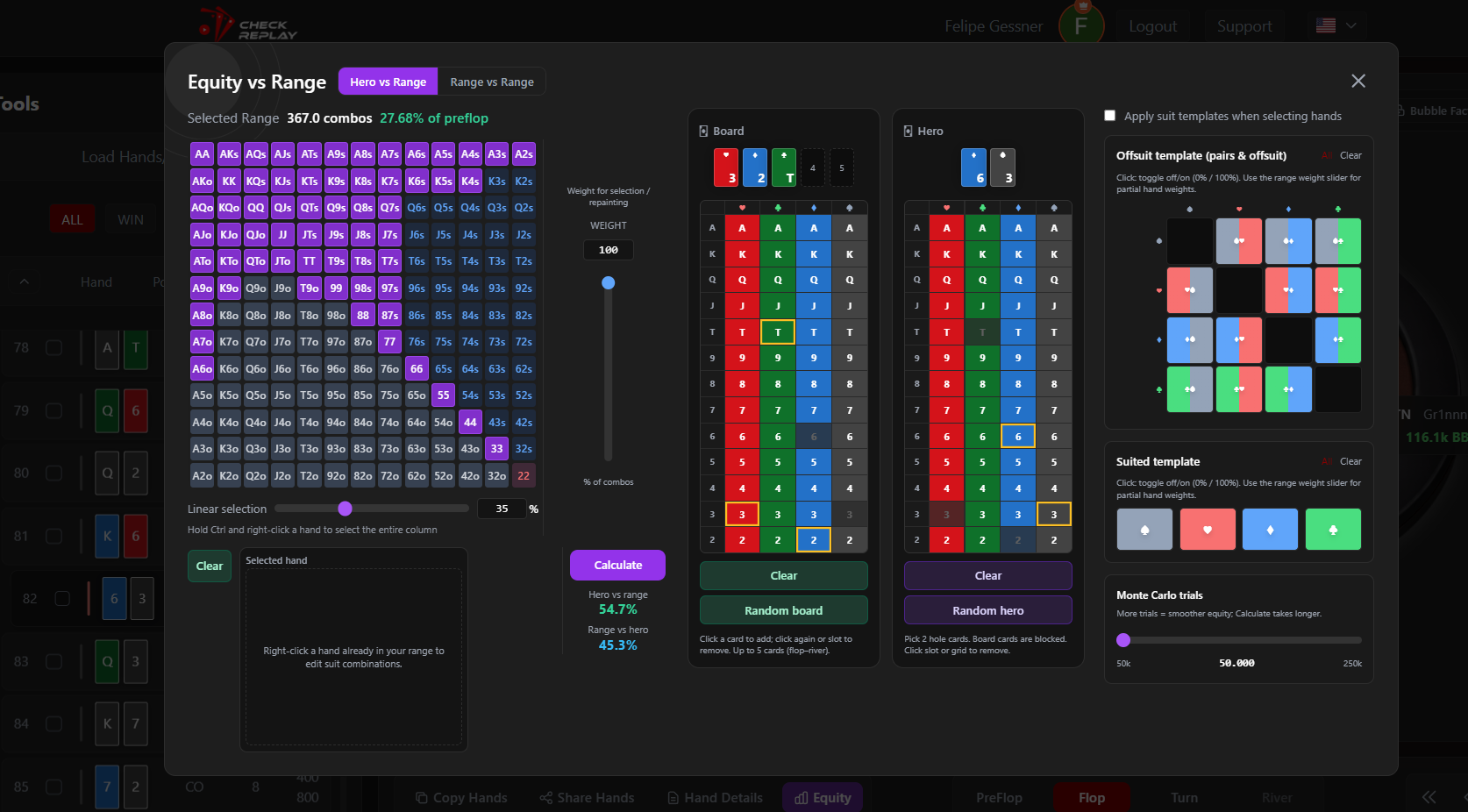
Studying opponent tendencies and leaks is like building a roadmap of the game, revealing shortcuts to profit that you can’t see in real time.
Integrating coaching, forums, and group study
Going it alone can only take you so far. In fact, some of my most rapid leaps in progress came from handing my trickiest hands to a coach, or even just posting in forums for feedback. A fresh set of eyes often spots things I never dreamed of.
When I joined a poker study group, our typical session went like this:
- Each person brought a hand they found confusing or interesting.
- We would run it through a poker replayer, pausing on key streets.
- Each member offered their thought process and alternative lines of play.
- Together, we’d consult ranges, GTO outputs, and personal experiences to form better strategies for that spot.
The benefits were huge. Not only did I correct mistakes, but I learned to see hands from multiple perspectives. It didn’t matter if someone else’s style was tighter or looser—the discussion itself sharpens your thinking.
Discussion brings fresh insight to the table and pushes you out of comfort zones where most improvement waits.
Online communities, Discord servers, and even coaching sessions all offer ways to get feedback and accountability. I recommend investing some time each week for outside input, beyond just solo study.
Using quizzes and hand analysis tests
After I spent some time revisiting hands and integrating theory, I started to feel…stuck. The “aha!” moments were fewer. That’s when I started using quizzes and quick hand decision tests. Setting up scenarios and forcing yourself to pick a line, then compare it to what strong players or the tools recommend, is one of the fastest paths to sharpening your strategy.
I treat these quizzes as a “live fire” training, helping me recall theory under pressure—and I definitely noticed improvement in my reaction time and accuracy in real games. You can find poker hand quizzes built into some replayers or online forums, which makes the review process structured and fun at the same time.
Bringing theory and practice together
One of the best lessons I learned is this: Poker is not just a game of theory. It’s a game of application, of bringing abstract concepts into the live-fire moments of play. All the hand reviews and math in the world won’t help if you never practice what you’ve learned.
Here’s my cycle, and what I recommend for any serious learner:
- Study a handful of hands or a new strategy using a poker replayer or hand tool.
- Write down two or three key takeaways you want to practice, not just remember.
- During your next session—live or online—consciously seek out situations where you apply those concepts.
- Afterward, load the hands back into your reviewing tool and see how your new approach played out.
This “review, apply, and re-review” cycle is how deep learning happens, as I’ve seen in my own game and in players I study with. It’s also encouraged in many top-level poker courses and coaching environments.
Tracking progress and refining your approach
Improvement is gradual in poker—a mix of small breakthroughs and long plateaus. To avoid getting discouraged or plateauing for months, I keep a “progress journal.” It’s not fancy, just entries like:
- This week’s focus: bluffing spots on scary river cards.
- Reviewed 20 hands, found that I miss thin value bets often.
- Plan: Be less afraid to value bet against loose opponents late in the hand.
- Results: Fewer “hero calls” from opponents, more pots dragged without showdown.
The habit of recording small wins, mistakes, and questions keeps you honest and motivated—making the learning process more enjoyable and less stressful.
Studies from the University of Bremen show skillful players lose less with weak hands and recover better from bad beats. Reviewing your hands and tracking daily or weekly improvements lets you spot if you’re falling into these traps—or improving at dodging them.
Common pitfalls and how to avoid them
I’ve seen—even in myself—the same errors get repeated session after session, usually because of a blind spot in review. Here are mistakes I caution every student (and myself) against:
- Over-focusing on big pots for study and ignoring smaller, repeating spots where you leak chips.
- Judging your decisions solely by outcomes (“I won, so it was right”), not by whether your thought process was good.
- Getting stuck in “paralysis by analysis”—spending all your time studying, with too little play or real-world testing.
- Resisting feedback or discussion; everyone needs outside views to sharpen their own judgment.
Balance is the answer: split your routine between review, discussion, and focused play. This approach has trimmed months off my own learning curve and helped me bounce back faster from rough patches.
Making the most of modern tools
Once I began treating poker study as a craft—using every resource at my disposal, keeping notes, pacing myself—the game became easier and more rewarding. The flexibility of a platform like Check Replay, which lets me share links with my coach, customize visuals, and integrate hand analysis tools, has saved me dozens of hours and cut through confusion. The project’s compatibility with major poker rooms and painless export options makes it simple to review sessions and spot leaks quickly.
For players who want to take the next step, I recommend combining the practical guides at poker strategy tips with a routine that blends hand review, theory quizzes, and feedback from others. Reading and discussion only fuel progress when grounded in real hand analysis.
Final thoughts: The habit that transforms your game
Studying poker hands online changed my approach, my results, and my enjoyment of the game. Poker rewards thoughtful, regular self-improvement—players who build review into every week simply get better, year after year.
The science backs this up: as studies from the University of California Davis show, winners develop the skill of processing information about their cards and opponents on the fly, a habit formed off the tables first.
I encourage you, whether just starting or years into your poker journey, to try integrating a poker replayer and structured hand review into your routine. Platforms like Check Replay are built from the ground up for this task, giving you the power to upload, customize, and share hands without hassle. Review, reflect, and keep pushing for those incremental gains—your future self will thank you, both at the tables and away from them.
The difference between a hopeful player and a winning one? Relentless, focused review.
If you want to start saving time, sharing analysis more easily, and getting the most out of every session you play, I recommend giving Check Replay a try to accelerate your next leap forward.
Frequently asked questions
What is a poker hand replayer?
A poker hand replayer is a digital tool that allows players to upload and replay hand histories from their online sessions, recreating the sequence of betting, player movements, and outcomes as they originally unfolded. These tools help users relive each hand in full detail, making it easier to spot mistakes, test different strategies, and share hands with friends or coaches for discussion.
How to analyze poker hands online?
The most effective way to analyze poker hands online is by exporting your session hand histories and uploading them to a replayer platform like Check Replay, where you can review each action step-by-step. Look at every hand with a clear structure: assess stack sizes, positions, betting patterns, and opponent reads. Try pausing after each decision point and reflecting on your options, considering both mathematical probabilities and psychological factors, as supported by game theory research. For specific hands, you can also integrate GTO theory using solvers to compare your choices to optimal ones.
Is studying poker hands online helpful?
Yes, studying poker hands online is extremely helpful for improving both knowledge and decision-making. The process highlights recurring mistakes, spotlights emotional patterns (as shown in the University of Helsinki’s research), and lets you practice reacting better to tough situations. Over time, reviewing hands and learning from feedback drives long-term improvement.
Where can I find good poker replayers?
Reliable poker replayers can be found through platforms specifically built by poker professionals, such as Check Replay, which offers intuitive interfaces, speedy hand uploads, and versatile support for many online poker sites. Look for tools that simplify exporting hands, allow visual customization, and provide instant sharing options to make the review process smoother.
What are the best tools for online poker study?
The best tools for online poker study blend hand replayers, GTO solvers, odds calculators, and community discussion platforms. A poker hand replayer is your main tool for reviewing history and sharing analysis. GTO theory apps help you anchor your understanding in strong math, while quizzes and discussion forums develop your real-time skills. Platforms like Check Replay streamline these processes and are highly recommended for building a modern, effective study routine.