I still remember the first time I called down a big bet on the river, heart pounding, suspecting my opponent might be bluffing. Was it a hero call or just a simple bluff catch? For many poker players—especially those just starting to review hands and build strategy with tools like Check Replay—the difference between these two concepts often seems subtle. But it’s not just semantics. Understanding the real distinction can change your results at the table and help your poker studies become much more focused.
The short answer? Every hero call is a bluff catch, but not every bluff catch is a hero call.
What does it mean to bluff catch?
When I talk about “bluff catching,” I’m describing a spot where I hold a hand that only beats my opponent’s bluffs on the final betting round, usually on the river. Bluff catching is not about reading an opponent’s face or acting on a hunch; it’s a mathematical decision based on the likelihood that your hand is ahead of their bluffs but loses to any value hands they bet for profit.
It’s surprisingly common. Most river calls with medium-strength hands—like top pair with a weak kicker or second pair—are “bluff catches.” If my opponent is betting, and I call, my hand never beats their logical value bets, but it does beat their missed draws or outright bluffs.
Reviewing actual hands on Check Replay, I started to see how frequently these spots came up, whether I realized it during the heat of live play or not.
When does a bluff catch become a hero call?
“Hero calling” is a phrase I hear all the time. It carries drama—the image of a brave player making a borderline call and being right. In my experience, however, most hero calls are just bluff catches where the call seems especially tough, bold, or unusual. Maybe the bet is big, or my opponent’s story doesn’t add up, or my hand is very weak, but I make the call anyway.
Hero calls stand out because they’re rare and memorable, but at their core, they follow exactly the same logic as regular bluff catches.
For a deeper comparison of approach, I recommend the article on hero calling strategies for understanding what separates a routine bluff catch from an iconic hero call.
Bluff catching is not guessing: it’s math and logic
When speaking with newer players, I often hear stories about “feeling” an opponent is bluffing, as if poker were all about instinct. While experience does help, successful bluff catching is driven by pot odds, range analysis, combo counting, blockers, and betting patterns—not by emotions.
Here’s how I approach a bluff catching decision step-by-step:
- Calculate pot odds.Before I call a river bet, I always calculate what percentage of the time I need to be right for my call to break even. It’s as simple as dividing the size of the call by the total pot after I call.
- If the pot is $100 and my opponent bets $50, I must call $50 to win $150 (the total pot). That means I only need to win 33% of the time for a break-even call.
- If the bet is all-in for $100 into a $100 pot, I must call $100 to win $200, so I need to be right 33% again.
- Smaller bets mean I need to be right less often; large bets require me to have a higher confidence in my read.
- Analyze ranges and count combos.This means looking at what hands my opponent could actually have. I ask myself:
- What value hands would they play this way?
- What hands would they realistically be bluffing with?
- How many combinations (“combos”) are there for each group?
- An example: If the board shows 9♠ 8♠ 4♣ 3♦ 2♥ and my opponent bets big, I try to figure out how many busted draws (like missed spades or 5-6) could be bluffing, versus how many strong hands (like sets or overpairs) my opponent could have for value.
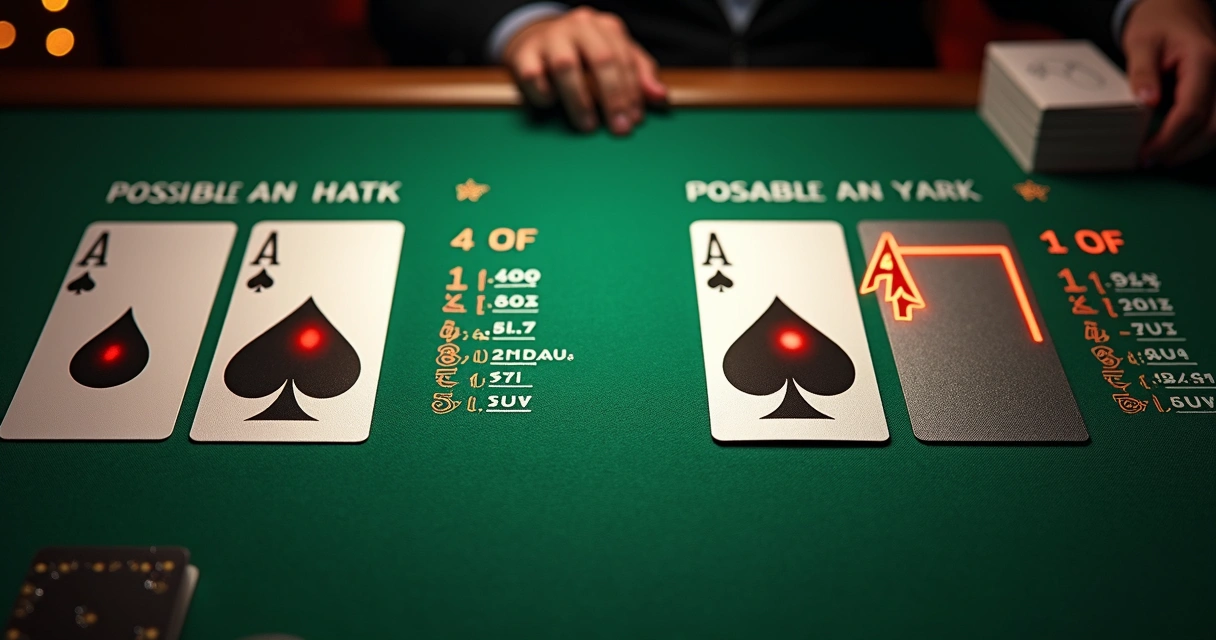
- Look for blockers.Blockers are cards in my hand that make it less likely my opponent has certain combinations. If I hold the ace of spades here, it’s less likely they’re bluffing with a missed spade draw. But if I block the straight draw (like I’m holding a 5♣), it’s less likely they have the nut straight, making me more confident in a call.
- Study betting patterns.Does my opponent normally bet big on the river with strong hands, and exactly this size with bluffs? Do they slow down after the turn? Review patterns by looking at previous hands in Check Replay. Patterns matter more than instincts.
 Using pot odds and combo counting in action
Let me walk through a quick hand example for clarity:
I am in a $1/$2 cash game. The pot is $100 on the river. My opponent bets $50 into the pot, so I need to call $50 to win $150.
Let’s pretend based on the action, my opponent can have:
- 5 possible value combinations (like sets, overpairs)
- 10 plausible bluff combos (like missed flush or straight draws)
So, for every 15 hands they bet this way, 10 are bluffs. That means they’re bluffing 67% of the time. Since my pot odds require I be right only 33%, calling here is clearly positive expected value. The analysis is cold, logical, and doesn’t rely on bravado.
The role of blockers and betting lines
Blockers can really tip the scales. There was a hand I reviewed in Check Replay where my holding made it impossible for my opponent to have the nut straight—giving me the confidence to call even against a large bet.
- Blockers add weight to your decision: if you block value combos, bluff catching gets better, if you block their most likely bluff, folding becomes smarter.
- I found a more detailed breakdown of using blockers and bet sizing in this hand review piece: bluff catching techniques.
 Common mistakes I see in bluff catching
Understanding theory is only the start. In practice, I see players—myself included—fall for some familiar traps:
- Calling because of curiosity, not math. “I just want to see it,” is expensive. Make every call for rational reasons only.
- Folding too often to aggression. Some players simply never catch bluffs, missing profitable calls. Be ready to call when the numbers say so.
- Overvaluing blockers without combo counting. Just because I block one hand doesn’t mean my call is always good. The balance of value/bluff combos matters more.
- Ignoring pot odds. Sometimes the pot lays you such a good price that you need to call with almost any hand, but many avoid it because it “feels” wrong.
Breaking these habits took time and, for me, consistent hand reviews. Reviewing sessions in Check Replay let me see hands after the fact, recalculating where my assumptions failed or held true.
Bluff catching is a skill you can study and practice
The biggest change in my game came from treating bluff catching not as an act of courage, but as a skill that can be trained. I began reviewing hands where I called—and where I folded—in every session using Check Replay, especially mistakes and close decisions. Over time, patterns emerged and my calls became sharper; the results followed.
Math, not magic, is the secret to great bluff catching.
If you want to sharpen your skills, focus on the technical side: pot odds, ranges, combos, blockers, and opponent tendencies. Emotional decisions will lead you astray, even if you luck out now and then.
Conclusion: Make smart calls, not just bold ones
In the end, the real difference between a bluff catch and a hero call is mostly in how the hand feels. Both rely on clear, mathematical thinking about how often your opponent is bluffing and whether your hand beats their range. Every hero call is a bluff catch—but not every bluff catch is memorable or dramatic. If you want to consistently make these calls pay, you need to train your decision making, review your hands, and put the math to work. That’s exactly what I strive for every time I load up Check Replay after a session: learning, not guessing. Try our platform for yourself and see how reviewing your own hands changes your approach to bluff catching, step by step.
Frequently asked questions
What is bluff catching in poker?
Bluff catching is calling a bet on the final betting round with a hand that only beats your opponent’s bluffs and loses to any value hands. It’s a calculated decision, using odds and logic rather than instinct or hope.
What is a hero call?
A hero call is a specific kind of bluff catch where the call appears risky, bold, or surprising—usually with a weak or marginal hand. It stands out because it’s rare or dramatic, but it’s based on the same pot odds and range analysis as any other bluff catch.
How does bluff catching differ from hero calling?
The key difference is perception. Every hero call is a bluff catch, but not every bluff catch is a hero call. Hero calls are memorable and feel brave, while bluff catching is about consistently making math-based calls against opponents’ bluffs.
When should I attempt a bluff catch?
You should attempt a bluff catch when your analysis shows that your opponent is bluffing often enough for your call to be profitable. Look at pot odds, estimate the number of value hands versus bluff combos, and factor in blockers and betting patterns.
Is hero calling profitable in the long run?
Hero calls are profitable only if you make them for good mathematical reasons—when your pot odds and combo counting confirm the call. Calling on gut feeling or curiosity alone will cost you money long term. Review and study your hero calls to ensure they’re hard-earned, not hopeful.