I have always thought poker was almost built for the camera. It has hidden information, long pauses, nervous hands, false confidence, private fear, public money. It is a game where nothing happens on the surface until suddenly everything happens at once. A stare can matter. A chip can matter. Silence can matter more than speech.
Poker works on screen because cinema and poker both depend on what the audience does not know yet.
Hollywood has loved card games for a long time, but the image of poker on screen changed a lot between 1998 and 2023. In my view, that shift tells us as much about real poker as it does about film. Each era found a different version of the game worth filming. Each film or series then taught viewers a different lesson about what poker is supposed to mean.
That is why poker in the movies has never been just background decoration. It has been a cultural teacher. One generation learned that poker was freedom. Another learned that it was danger. Another learned that it was luxury. Later, audiences saw it as a private economy, then as a lonely mental routine done under laptop light at 3 a.m.
Every era gets the poker story it deserves.
I think that is the real thread connecting the last twenty-five years. Rounders taught people that poker could be an identity. The Sopranos showed it as power and debt. Casino Royale made it glamorous and global. Molly’s Game pulled back the curtain on private high-stakes circles. Red Rooms did something newer and stranger. It treated poker as modern psychological labor.
For anyone who studies hands today, whether casually or with tools like Check Replay, this evolution is easy to feel. The questions players ask have changed. Older viewers wanted to know who had the tell. Modern players want to know the range, the stack depth, the sizing, the line, and whether the decision made sense even if the river card was cruel.
Timeline of poker on screen
- 1998, Rounders: modern poker culture
- 1999–2007, The Sopranos: underground poker and social power
- 2006, Casino Royale: poker as spectacle
- 2017, Molly’s Game: high-stakes private games
- 2023, Red Rooms: online poker and psychology
What interests me is not just which titles became famous. It is what they trained us to notice. They told viewers where to look when they watched a hand. At the face. At the bankroll. At the room. At the social ladder. At the software screen. In a strange way, they changed the grammar of poker itself.
Rounders and the birth of poker identity
Release year: 1998
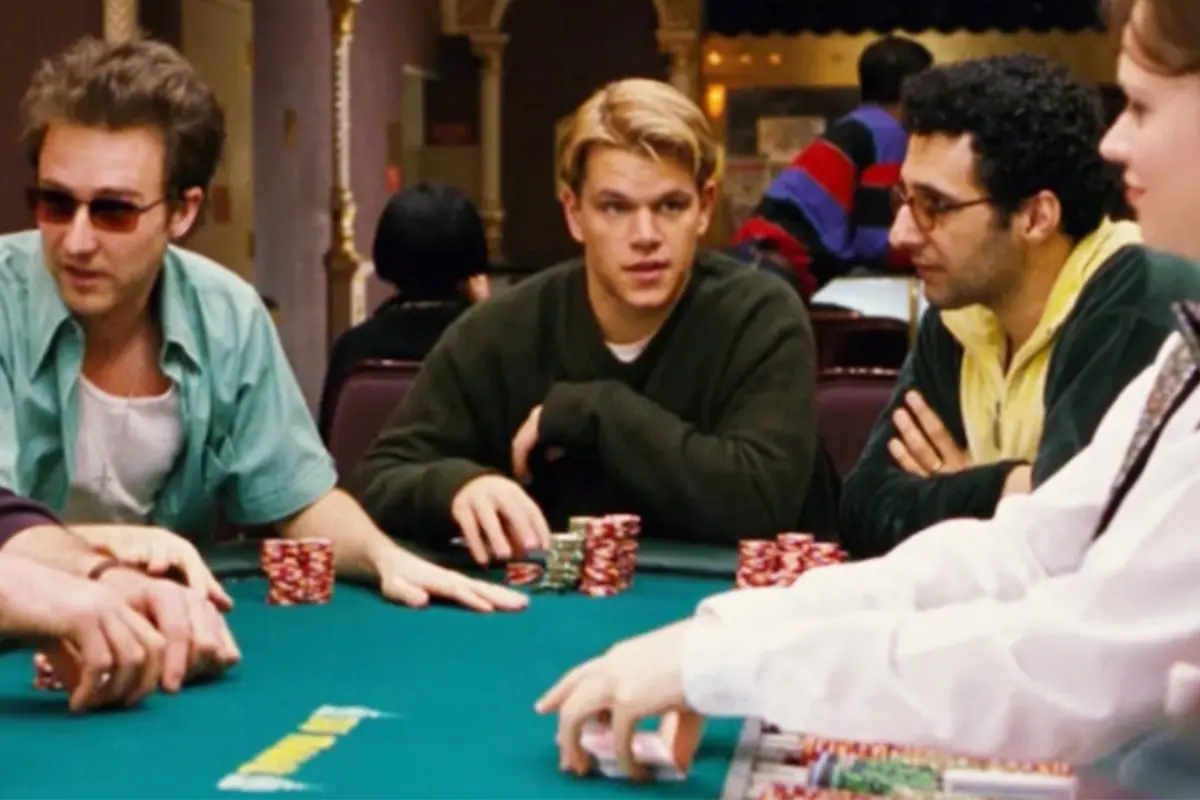
Before the early 2000s poker boom, Rounders arrived with near-perfect timing. It did not invent card rooms, bankroll stress, or the romance of risking rent money for one more session. But it gave all of that a shape people could imitate. I still think that was its real power. It made poker feel like a complete world with its own language, values, and codes.
Rounders did not sell a game first. It sold a self-image.
The film mattered because it suggested that a poker player was not just a gambler. He was a reader of people, a manager of fear, a survivor of variance, a person with edge. That distinction was huge. It separated poker from roulette in the public imagination. Roulette looked like surrender. Poker looked like agency.
And yet the film also got several genuine ideas right. Not all of them in technical detail, but in spirit.
- Bankroll matters more than confidence.
- Discipline often matters more than talent.
- Game selection can decide a player’s future before a card is dealt.
- Tells exist, but they are only part of the picture.
That last point still makes me smile. Hollywood loves visible tells because film needs bodies in motion. A trembling hand reads well on camera. A balanced checking range does not. But Rounders still felt closer to the real thing than many later stories because it understood that poker is partly about choosing your spots. Good players do not just play well. They choose where to play.
That concept, game selection, is one of the oldest and least glamorous truths in poker. You can be brilliant in the wrong lineup and still lose. You can be solid in the right game and thrive. Many films ignore this because it sounds less dramatic than a final showdown. Rounders did not ignore it.
It also captured something young viewers were hungry for: the idea that skill could beat chaos often enough to make a living possible. Not easy. Not clean. Possible. After Rounders, many future players did not rush to learn pot odds from a script. They rushed to imagine themselves inside the life.
The film’s deepest lesson was emotional, not mathematical.
I have seen that effect many times. Someone watches an old hand scene and does not ask whether the line was solver-approved. They ask what it feels like to sit there with rent, ego, and hope in the same pot. That is the movie’s real legacy. It gave poker a pulse people wanted to chase.
It still feels authentic because it respects the grind. It understands that poker is not one giant hand. It is a repeated test of judgment under pressure. If I had to sum up its place in the history of poker movies, I would say this: Rounders did not teach people how to play poker. It made them want to become poker players.
That urge still echoes through modern study culture. People now break down hands with far better tools, and platforms such as Check Replay make that process faster and cleaner, but the first spark for many players still came from a film that made poker look like a life worth trying.
The Sopranos and poker as power
Release years: 1999–2007
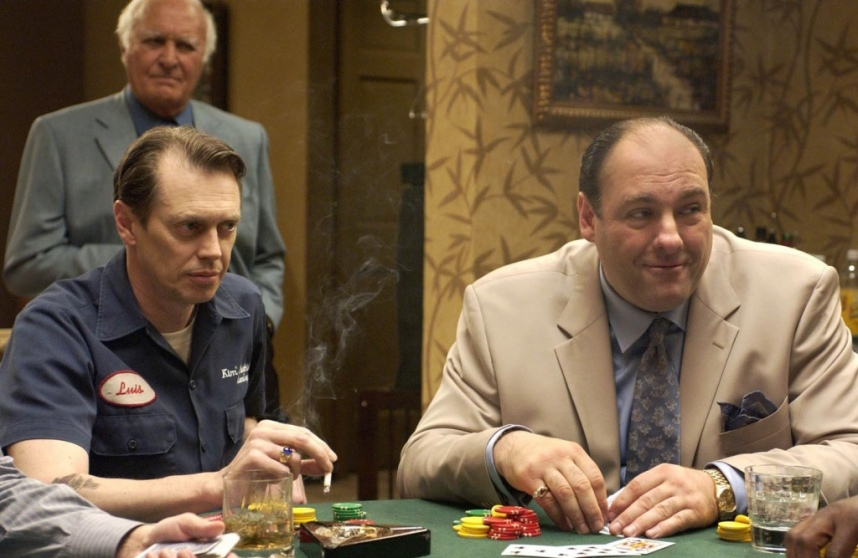
If Rounders treated poker like identity, The Sopranos treated it like hierarchy. That difference matters. In mafia stories, poker is never just a game. It is an arrangement. A way to display rank. A way to collect debt. A way to remind everyone who gets to sit, who gets invited, who gets humiliated, and who leaves owing money.
In The Sopranos, the pot is never only financial. It is social.
I think that is why poker fits crime stories so well. The game already contains unequal information, concealed intent, and fragile trust. Add organized crime, and every hand acquires a second meaning. Losing money is bad. Losing face is worse. Failing to pay may become catastrophic.
The show did not care much about teaching strategy, and that was the right choice. The point was not whether someone three-bet light from late position. The point was that the table made power visible. You saw who could joke, who had to laugh, who could borrow, who should not ask, and who ran the room without touching the deck.
Underground poker, in this version, is part social club and part trap. Reputation matters. Access matters. Debt carries moral weight. A person who cannot pay is not only broke. He becomes weak in public. That idea shaped how many viewers saw backroom games for years.
And to be fair, there is truth in it. In private or semi-private poker, relationships often shape the game before strategy begins. Who invited you. Who trusts you. Who can cover a bad night. Who wants action. Who should be avoided. This is one reason the romantic image of poker as a pure meritocracy has always been incomplete.
According to Hollywood, if you sit in the wrong private game long enough, eventually the cards become the least dangerous thing in the room.
The Sopranos understood that with unusual clarity. It showed poker not as a clean contest but as a system of social pressure. That image stayed with audiences. Even people who barely knew hand rankings could understand what was happening. Chips meant status. Debt meant exposure. The game became a stage on which class, masculinity, loyalty, and intimidation played out in plain sight.
In my experience, that helped broaden the public picture of poker. It was no longer only the dream of the talented grinder. It was also a social weapon. That is a darker lesson, but a real one.
Casino Royale and the age of spectacle
Release year: 2006
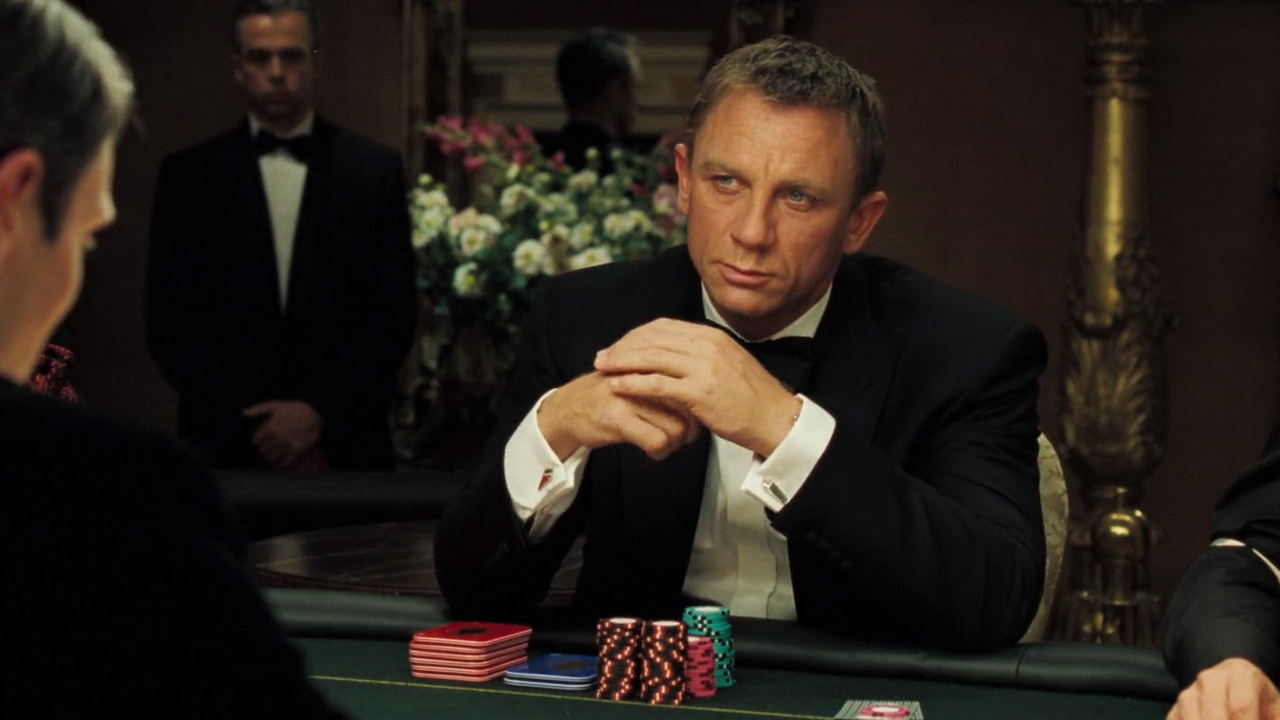
By 2006, poker had changed. Television had changed it. Broadcast graphics, hole-card cameras, celebrity tournaments, and a wider global audience had turned the game into a spectator event. Casino Royale did not create that shift, but it captured it perfectly.
Casino Royale made poker look like international theater.
The setting mattered. Clean suits. Massive stakes. Elegant room. Controlled voices. Every visual choice told the audience that poker had moved up in the world. This was no longer a smoky side room full of debtors and grinders. It was luxury competition. It was elite performance. It was glamour with chips.
And then there is the famous final hand, one of the most discussed card scenes in modern film. It became iconic because it gave viewers everything they think poker should contain: huge tension, giant bets, sharp reads, rare monsters colliding at exactly the right dramatic moment. It was absurdly memorable. It was also absurdly unlikely.
Hollywood loves impossible coolers because probability is less cinematic than shock.
Real tournament poker usually does not build toward miracle hand distributions with this level of convenience. Strong hands collide, yes. But films often stack the deck emotionally even when the cards are random. They need a climax. Real poker is ruder. It often ends with a fold, a small pot, or a mathematically sound call that feels boring to everyone except the person who made it.
Casino Royale also fed one of the strongest myths in card culture: the face-reading myth. James Bond did not invent the phrase “poker face,” but he gave it new polish. The idea that elite poker is won mainly by studying tiny facial changes became irresistible to mass audiences.
I understand why. Faces are cinematic. Ranges are not. But modern poker, especially at a high level, is much more about structure than expression.
- What hands can this player have here?
- What size makes sense with those hands?
- How does stack depth affect pressure?
- Is this call good over time, not just in this moment?
Modern poker is built more on decision quality than on dramatic face reading.
That does not mean tells are fake. They are real, especially in live settings. But movies often act as if a twitch can defeat the whole logic of a hand. In real play, patterns, frequencies, stack sizes, and population habits often tell a fuller story than a raised eyebrow.
Still, I would never dismiss Casino Royale. It changed how millions pictured the game. It moved poker from niche fascination to polished global entertainment. If Rounders whispered that poker could be a life, Casino Royale announced that poker could be a spectacle.
That influence still lingers in how people remember famous scenes, and in how they search for discussions about the history of poker on screen. They are not just looking for films. They are looking for the moment poker became stylish enough to wear a tuxedo.
Molly’s Game and the economy behind the glamour
Release year: 2017

Molly’s Game arrived after audiences had already absorbed the glamorous image of big poker. What it added was infrastructure. It showed the machinery behind high-stakes private games: the guest list, the favors, the movement of money, the value of reputation, the strange business of putting the right people in the same room.
Private poker is often less about cards than about curation.
This is one reason many serious players see the film as one of the more realistic screen portrayals of poker culture. Not because every scene is technically perfect, but because it understands the ecosystem around the game. Access is a currency. Liquidity is a hidden pressure point. A bankroll is not just a pile of money. It is time, resilience, and the right to survive swings.
For new players, that word bankroll may sound abstract. It should not. A bankroll is simply the money set aside for poker, separate from daily life. In real poker, this separation protects judgment. Without it, every decision becomes emotionally louder than it should be.
Bankroll management is what allows skill to survive variance.
Molly’s Game also captured another truth casual viewers do not always see: table selection is social engineering. The best game is not necessarily the one with the biggest blinds. It is the one with the best mix of money, personality, comfort, and weakness. Professionals know this. Hosts know this. Wealthy amateurs often feel it without naming it.
Networking sits at the center of all of this. That can sound less romantic than a river card, but it is deeply real. Private poker lives on trust, image, and introductions. If Rounders gave us the lone grinder dream, Molly’s Game reminded us that much of poker is built through doors opened by other people.
I also think the film did a good job showing how high-stakes culture can drift from game into performance. Players are not only betting on hands. They are betting on versions of themselves. The room becomes a theater of confidence. The chips are real, but so is the self-presentation.
For anyone who studies hands now, there is a useful lesson here. A hand history never exists in a vacuum. Context matters. Player type matters. Incentives matter. Reviewing spots with a tool like Check Replay can be so valuable for this exact reason. It lets players step back from the noise of the room and ask a colder question: what was really happening here?
That is the hidden connection between modern study and this film. Molly’s Game is about the game behind the game. Serious hand review is the same idea in quieter form.
Red Rooms and Poker as a Means to an End
Release year: 2023
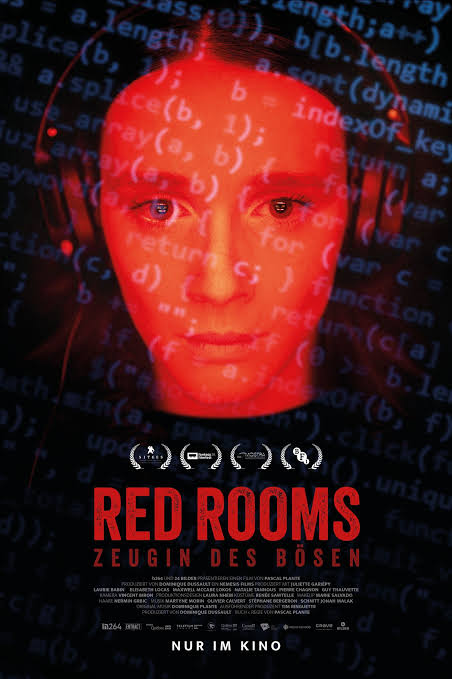
Poker leaves the casino floor and becomes a profession.
Unlike the other works on this list, Red Rooms is not really about poker. It is a psychological thriller whose central focus is an intensely antisocial young woman obsessed with something entirely different. Poker simply happens to be the profession that finances her life and allows her to pursue that obsession.
That is precisely why I wanted to include it.
I went into the film expecting a psychological drama, not a poker movie. So it genuinely surprised me when I realized the protagonist was an online cash game professional, quietly grinding from Canada.
Poker is never the destination of the story. It is the vehicle.
There are no glamorous casino tables, dramatic all-ins, or legendary tournament showdowns. Instead, poker is presented almost like any other highly specialized profession. The protagonist studies, plays, wins consistently, and moves on. The game isn’t romanticized or exaggerated—it simply exists as part of her routine.
That understated portrayal feels remarkably modern.
For many professional players today, poker isn’t an adventure. It’s work. Sessions begin, decisions repeat, results fluctuate, and the next day starts much the same way. The emotional highs and lows Hollywood usually celebrates are replaced by discipline, routine, and consistency.
What makes Red Rooms interesting is that poker never defines the character’s personality. Instead, it highlights one of her traits: exceptional analytical ability. She is talented enough to beat online cash games consistently, but that talent is only one piece of a much larger—and much darker—psychological portrait.
In a way, this is one of the most realistic depictions of modern poker I’ve seen on screen.
Not because it explains ranges or strategy in depth, but because it treats poker as something many professionals ultimately become: a job. A demanding, intellectually challenging job that rewards patience, emotional control, and sound decision-making over long periods of time.
Modern online poker rarely looks cinematic.
It often looks like a person sitting alone in front of a monitor, making hundreds of disciplined decisions that nobody else will ever see. That image may lack Hollywood glamour, but it reflects reality far better than another spectacular final-table showdown.
- That is why Red Rooms earned a place on this list. Not because it is a poker film, but because it quietly acknowledges something that few movies ever do: for thousands of people around the world, poker is simply how they make a living.
How Hollywood’s poker changed
Looking across these works, the progression feels almost too neat, but it is real. Poker on screen moved through distinct identities because poker in life did too.
- It began as a streetwise contest of identity and hustle.
- It became a social tool inside criminal and debt-based systems.
- It rose into televised glamour and global spectacle.
- It shifted toward private high-stakes networks built on access.
- It settled into online psychological discipline and routine analysis.
The image of poker changed because the conditions of poker changed.
That point matters. Hollywood was not just inventing fantasies from nowhere. It was responding to the game’s real migration. Card rooms became more visible. Television made tournament poker legible to outsiders. Wealth and celebrity changed where some of the biggest games happened. Online platforms changed where serious volume was played. Study culture changed what counted as skill.
Each screen portrayal then fed those changes back into the public mind. That loop is powerful. Film shapes expectation. Expectation shapes who joins the game. New players then reshape the culture again.
I think this is why people often remember poker through scenes rather than through sessions. A movie can freeze a version of the game in public memory. For years, one face, one room, one final hand can define poker for millions who never played a tournament. The image outlives the accuracy.
That is not necessarily bad. Stories are how most people first approach a complex game. But stories leave fingerprints. If someone believes poker is mostly about tells, that belief came from somewhere. If someone believes poker is glamorous, dangerous, lonely, or intellectual, cinema probably helped.
Even current hand-study habits sit in conversation with those old images. I notice it whenever players want to revisit famous scenes or compare fictional drama with real logic. That is part of why a piece like this reflection on Hollywood and poker culture feels timely. We are still sorting out what the movies taught us, and what the game actually is.
What Hollywood still gets wrong
No matter the era, screen poker still has a few habits it cannot quit.
- Too many giant all-ins.
- Too many miracle rivers.
- Too many perfect soul reads.
- Too many monster-versus-monster final hands.
- Too much faith in facial tells.
- Too little attention to boring but winning decisions.
Real poker is usually less cinematic and more repetitive than film allows.
And yet I cannot blame movies entirely. Cinema needs compression. A two-hour story cannot show six hours of patient folding and one excellent river block bet. Films exaggerate because drama needs peaks. Poker, in real life, often rewards restraint.
Final thoughts
When I look back at the last twenty-five years of poker on screen, I do not just see famous scenes. I see changing public beliefs. Rounders taught viewers that poker could be a life. The Sopranos taught them that the table could enforce power. Casino Royale taught them that poker could be polished into luxury theater. Molly’s Game showed that access and money flow shape the biggest games. Red Rooms showed that modern poker may happen in silence, online, inside the mind.
Hollywood exaggerates poker, but it also preserves each era’s fantasy about what poker means.
That, to me, is why these stories still matter. They did not simply entertain millions. They taught millions where to locate the soul of the game. In the stare. In the debt. In the tuxedo. In the guest list. In the grind.
Real poker is broader than any one of those images. It includes live reads, yes, but also math, pattern recognition, emotional control, bankroll care, table selection, and honest review after the chips are gone. If the movies made people fall in love with the myth, modern study is what helps them meet the game itself.
Hollywood gave poker its mythology.
Real poker gave it its discipline.
The movies taught us to admire the impossible hand.
The game teaches us to appreciate the thousands of ordinary decisions that come before it.
If watching these films makes you want to understand the game beneath the drama, that’s where studying real hands begins. Tools like Check Replay help bridge that gap, turning memorable poker scenes—and your own sessions—into opportunities to learn.
Frequently asked questions
What are the most famous poker movies?
The best-known titles from the last twenty-five years include Rounders, Casino Royale, and Molly’s Game, while The Sopranos and Red Rooms also shaped how viewers think about poker on screen. These works became famous not just because they featured cards, but because each one defined a different image of the game.
How did films change public view of poker?
Films changed public opinion by giving poker a series of strong identities. One era framed it as a lifestyle, another as crime and debt, another as luxury spectacle, and another as mental endurance. Most people did not learn poker from textbooks first, but from stories that told them what kind of people play it and why.
Where can I watch classic poker scenes?
Classic poker scenes are usually found through the official release platforms, digital rentals, or licensed streaming services that carry older films and television series. If your goal is study rather than nostalgia, I think it also helps to revisit the hand logic afterward and compare the drama with real play.
What is the impact of poker in movies?
The impact is cultural as much as commercial. Poker scenes helped make the game look intelligent, stylish, risky, and emotionally loaded. Movies gave poker a public mythology, and that mythology influenced who wanted to play, how they expected the game to feel, and what they thought winning looked like.
How accurate is poker in Hollywood films?
Some films are accurate about atmosphere, pressure, bankroll stress, and social dynamics, but less accurate about hand frequencies and dramatic reads. Others get the glamour right while stretching probability far beyond normal play. Hollywood often captures the feeling of poker better than the math of poker.